
Lieutenant Governors of Saskatchewan
The Lieutenant Governor of Saskatchewan is the highest official in the province.
Canada is a constitutional monarchy, and His Majesty King Charles III is our monarch, making him King of Canada and our Head of State. The lieutenant governor is The King’s representative in Saskatchewan. That is why it is often said that a lieutenant governor represents “The Crown”.
The position has evolved but remains non-elected. The main duties include fulfilling constitutional responsibilities, honouring individual achievement, and celebrating special occasions with communities throughout the province. More information about the role and its responsibilities are available here.
There are no published criteria for choosing lieutenant governors, however it is generally understood that they are selected by the prime minister, and appointed by the governor general, based on their record of distinguished service to their province and country. Reading the biographies of the former Saskatchewan lieutenant governors, it is clear that they led extraordinary lives of service and accomplishment.
-
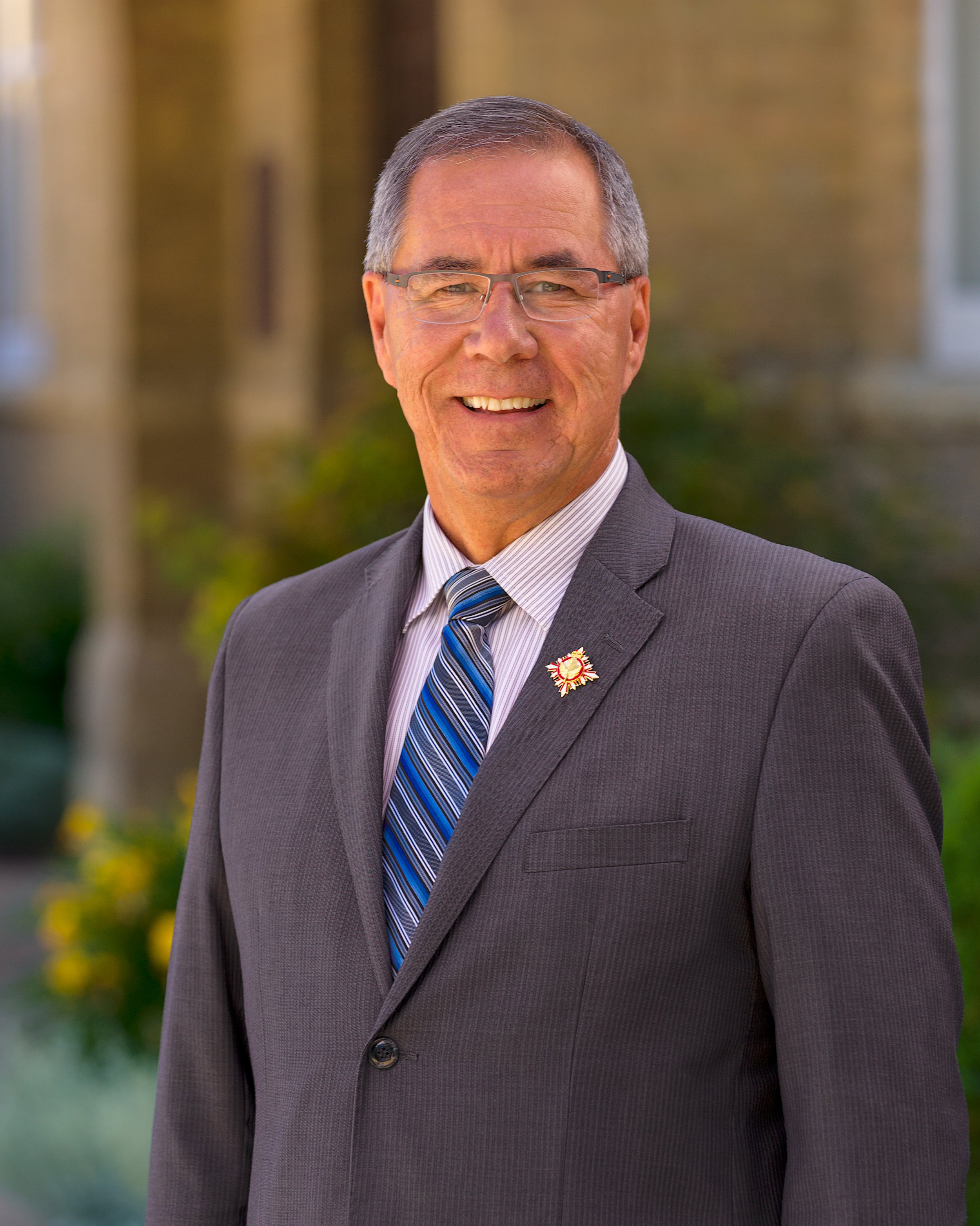
The Honourable Russ Mirasty
2019 - 2025
-

The Honourable W. Thomas Molloy
2018 - 2019
-

The Honourable Vaughn Solomon Schofield
2012 - 2018
-

The Honourable Dr. Gordon L. Barnhart
2006 - 2012
-

The Honourable Dr. Lynda M. Haverstock
2000 - 2006
-

The Honourable John E.N. Wiebe
1994 - 2000
-

The Honourable Dr. Sylvia O. Fedoruk
1988 - 1994
-

The Honourable Frederick W. Johnson
1983 - 1988
-

The Honourable C. Irwin McIntosh
1978 - 1983
-

The Honourable George Porteous
1976 - 1978
-

The Honourable Dr. Stephen Worobetz
1970 - 1976
-
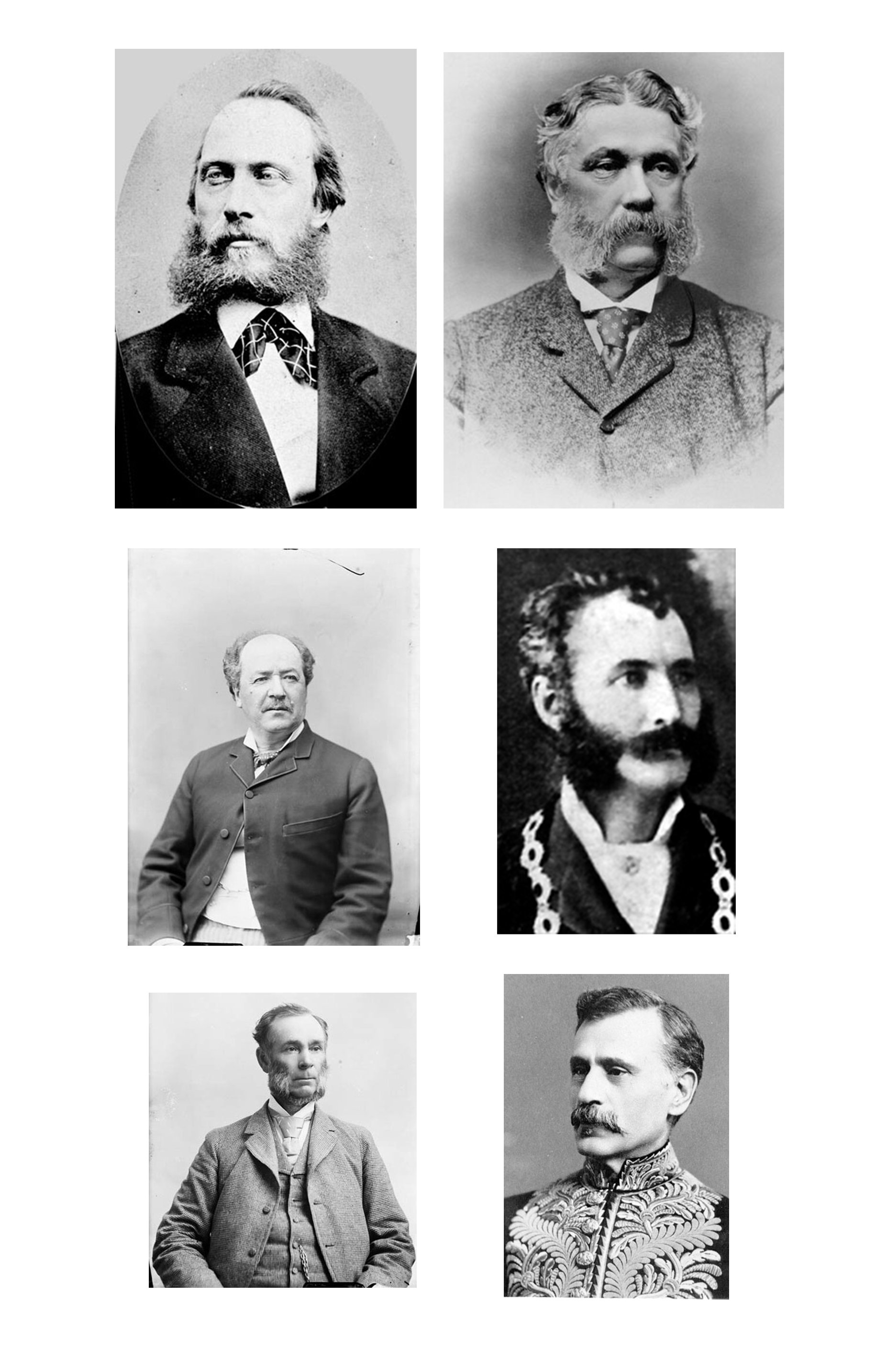
Former Lieutenant Governor's Archive
Before 1970
The Honourable Russel Mirasty
2019-2025
Russel (Russ) Mirasty was sworn in as Saskatchewan’s 23rd Lieutenant Governor on July 18th, 2019.
Russ Mirasty was born and raised in La Ronge and is Cree and a member of the Lac La Ronge Indian Band, making him the first Indigenous person to serve as lieutenant governor of Saskatchewan. His grandparents led a traditional life of fishing, hunting and trapping. From his grandparents and mother he was taught the value of a connection to the land, hospitality and community service.
Mr. Mirasty joined the Royal Canadian Mounted Police (RCMP) in 1976, and was one of only two Indigenous cadets in his troop. He served in various roles across the country, including as Director General of National Aboriginal Policing Services and as Commanding Officer of “F” Division (Saskatchewan).
Over his 36-year career, Mr. Mirasty was posted to seven provinces, performed duties in every province and territory, and participated in an exchange with the Northern Territory Police Service in Australia. He retired from the RCMP as Assistant Commissioner in 2013.
Following his retirement, Mr. Mirasty continued to devote himself to the residents of Saskatchewan by co-leading the Student First Engagement process which led to the development of a province-wide education strategy. He also served as a member of the League of Educational Administrators, Directors and Superintendents, and as a board member on the Community Safety Knowledge Alliance. He was appointed to Saskatchewan’s Advisory Group on Poverty Reduction, and served on the board of the McDowell Foundation, which supports research, inquiry, and sharing of information for the K to 12 education system.
At his installation ceremony in the Legislative Building, Mr. Mirasty wore a traditional morning suit and leather moccasins that he had commissioned by a craftsperson from his home community. While serving as lieutenant governor, he emphasized the importance of reconciliation and multiculturalism, sharing his culture and often bringing greetings from the Sovereign in his first language of Woodland Cree. Mr. Mirasty was the catalyst for, and the leader of, the creation of the Saskatchewan Residential School Memorial on the grounds of Government House in Regina. The building of the Memorial fulfilled Call to Action #82 of the Truth and Reconciliation Commission of Canada.
On the afternoon of April 22nd, 2024, Mr. Mirasty and his wife Donna Mirasty officially welcomed Governor General Mary Simon and her husband Whit Fraser to Government House. The Governor General was also the honoured guest of a reception held that evening in the ballroom with invited guests. Though Mary Simon had actually met with the Mirastys at Government House on September 22nd, 2022, spending time at the Saskatchewan Residential School Memorial, the 2024 visit was the first official occasion that the first Indigenous Governor General of Canada was hosted by the first Indigenous Lieutenant Governor of Saskatchewan.
In recognition of his outstanding contributions throughout his life, Mr. Mirasty received the Queen’s Golden, Diamond and Platinum Jubilee Medals, as well as the King Charles III Coronation Medal and the Meritorious Service Medal.
After leaving office, Russ Mirasty was appointed Chair of the Minister of Corrections, Policing and Public Safety Saskatchewan Marshals Service Advisory Council, received an Honorary Doctor of Laws from the University of Regina and became an Executive-in-Residence at the Johnson Shoyama School of Public Policy at the University of Regina. Mr. Mirasty and his wife Donna have two children and three grandchildren.
The Honourable W. Thomas Molloy
2018 - 2019
William Thomas (Tom) Molloy was installed as Saskatchewan 22nd Lieutenant Governor on March 21st, 2018.
Tom Molloy was born and raised in Saskatoon and completed his Law Degree at the University of Saskatchewan. He became a respected negotiator, lawyer, and author, earning the title of a “modern father of Confederation” for his work in treaty-making and reconciliation with Indigenous people in Canada. Mr. Molloy negotiated numerous agreements and treaty settlements that changed the face of the country, in particular the historic Nunavut Land Claim Agreement and Nisga’a Final Agreement in British Columbia. His award-winning book The World Is Our Witness: The Historic Journey of the Nisga’a into Canada was published in 2000.
Mr. Molloy’s work took him across Canada from coast to coast to coast. While negotiating with the Inuit, he lived briefly with an Inuit family on the land, believing that it was important to get to know the people and the land impacted by the agreement.
In addition to a distinguished legal career, Mr. Molloy served as Chancellor of the University of Saskatchewan from 2001 to 2007 and was named Chancellor Emeritus.
Mr. Molloy’s extensive community work included service to national and local organizations such as Wanuskewin Heritage Park, Indigenous Works, Forum for Young Canadians, Canadian Landmine Foundation, RCMP Heritage Centre, Habitat for Humanity Canada, and the Kidney Research Foundation of Saskatchewan.
During his brief time in office, Mr. Molloy participated in hundreds of events and focused on reconciliation between people of Indigenous and non-Indigenous ancestry, attending treaty gatherings, pow wows and a sweat lodge.
In acknowledgement of his impressive professional achievements and outstanding community service, Mr. Molloy was appointed an Officer of the Order of Canada, awarded an Honorary Doctor of Laws Degree from the University of Saskatchewan, and received the Ramon John Hnatyshyn Award for Law from the Canadian Bar Association, among many other honours and awards.
Mr. Molloy had four daughters and eleven grandchildren. He passed away from pancreatic cancer while serving as Lieutenant Governor on July 2nd, 2019.
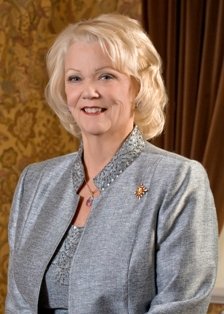
The Honourable Vaughn Solomon Schofield
2012-2018
Vaughn Solomon Schofield was installed as Saskatchewan's 21st Lieutenant Governor on March 22nd, 2012.
Born and raised in Regina, Vaughn Solomon Schofield began her post-secondary studies at the University of Saskatchewan, Regina Campus, before completing her studies in fashion merchandising at the Rae-Vogue School in Chicago.
In the 1980s, Ms. Solomon Schofield chaired the Board of Crime Watch, a North and South American crime prevention organization. Being fluent in Spanish, she also worked with the Government of Guayaquil, Ecuador, to establish their Crime Watch group and work as an interpreter. She hosted a Crime Prevention talk show in Fort Lauderdale and was twice voted Florida's Crime Prevention Woman of the Year.
Before her appointment as Lieutenant Governor, Ms. Solomon Schofield was the President and CEO of Western Group of Companies, a real estate group holding interests throughout western Canada, and served on the board of directors of the Regina Airport Authority.
While in office, Ms. Solomon Schofield established the Lieutenant Governor’s Military Service Pin, which she distributed to over 8,000 acting or former military people who have lived in Saskatchewan. She also hosted the Support our Troops Gala, a national fundraiser for charities that assist military families.
After leaving office, Ms. Solomon Schofield served as Chair of the Saskatchewan Police Commission and on the boards of directors of SaskPower and SaskWater. She was the Provincial Chair of the Canadian Forces Liaison Council, the Honorary Colonel of 10 Field Artillery Regiment and, in 2025, became the Honorary Colonel of 15 Wing Moose Jaw.
Her many accolades include the Canadian Forces Medallion for Distinguished Service, Saskatchewan Order of Merit, Saskatchewan Volunteer Medal, Queen Elizabeth II Diamond Jubilee Medal, the King Charles III Coronation Medal, and, in 2025, an Honorary Doctor of Laws from the University of Regina.
Vaughn Solomon Schofield, and her late husband Gordon Schofield, had two children and four grandchildren. She passed away on April 8th, 2026.
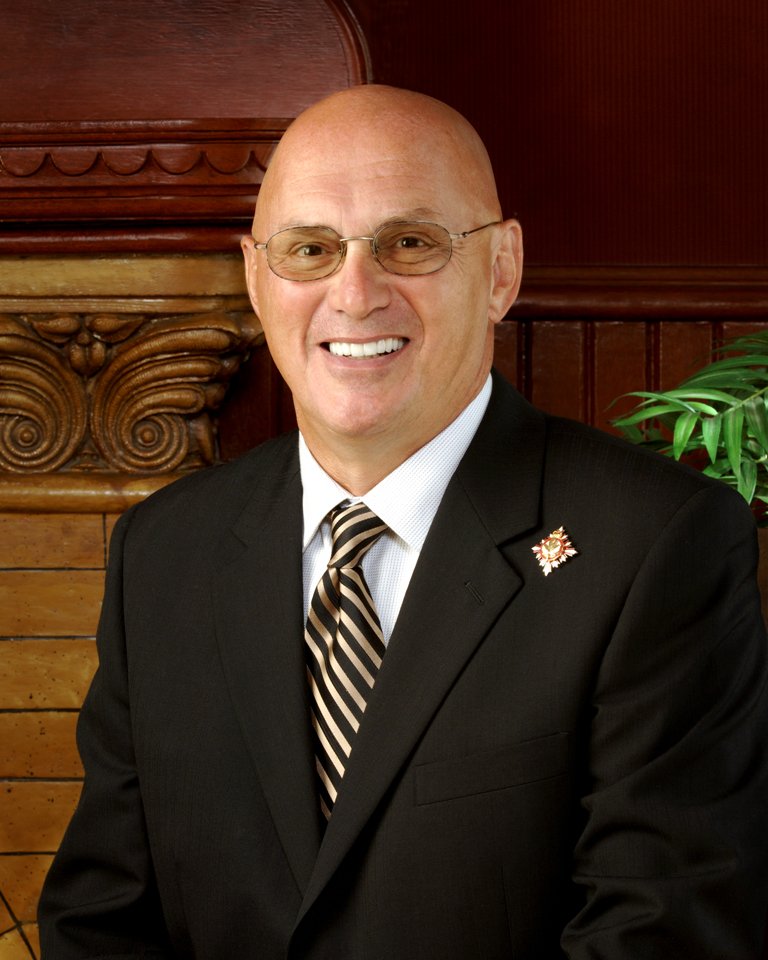
The Honourable Dr. Gordon L. Barnhart
2006 - 2012
Gordon Leslie Barnhart was installed as Saskatchewan's 20th Lieutenant Governor on August 1st, 2006.
Born and raised in Saltcoats, Saskatchewan, Gordon Barnhart graduated from the University of Saskatchewan with a Bachelor of Arts Honours in 1967. In 1969, at just twenty-four years of age, he was invited to become Clerk of the Saskatchewan Legislature, becoming the youngest legislature clerk in the Commonwealth! Dr. Barnhart served in that position until 1989 and then moved to Ottawa to serve as Clerk of the Senate and Clerk of the Parliaments for five years.
When he returned to Saskatchewan in 1994, Dr. Barnhart began teaching political studies at the University of Saskatchewan and served as University Secretary from 2000 to 2005.
Dr. Barnhart completed a master’s degree in history at the University of Regina in 1977 and a Ph.D. in history at the University of Saskatchewan in 1998. His doctoral thesis about Walter Scott was the basis of his book entitled Peace, Progress and Prosperity: A Biography of Saskatchewan's First Premier, T. Walter Scott. Some of his other publications include Saskatchewan's Premiers of the Twentieth Century and Building for the Future: A Photo Journal of Saskatchewan's Legislative Building.
Dr. Barnhart worked with the Canadian International Development Agency and United States Agency for International Development. In his capacity as a consultant, he trained elected members and public servants in South Africa, led a seminar in Vietnam for 110 newly elected female parliamentarians, and designed and led workshops for Russian elected members and public servants.
As a former university professor, and an expert on the Canadian parliamentary process, during his term as lieutenant governor, Dr. Barnhart focused on educating people about the role and its importance in our constitutional monarchy. He also established the Lieutenant Governor’s Leadership Forum for high school students. The conference’s motto was: “ten days that could change your life, and your province” and the participants were advised on educational and career opportunities in Saskatchewan.
Dr. Barnhart also played a key role in the development of the Government House Edwardian Gardens. In addition, he and his wife Naomi Barnhart were strong advocates of physical fitness and healthy lifestyles and participated in numerous charitable walk/runs.
Post Lieutenant Governor, Dr. Barnhart was named a Member of the Order of Canada. He also served as Mayor of Saltcoats briefly and as President of the Saskatchewan Urban Municipalities Association from 2017 to 2021.
The Honourable Dr. Lynda M. Haverstock
2000-2006
Lynda Maureen Haverstock was installed as the 19th Lieutenant Governor of Saskatchewan on February 21st, 2000.
Lynda Haverstock was born in Swift Current, Saskatchewan. She earned a Bachelor of Education, a Master of Education and a Ph.D. in Clinical Psychology from the University of Saskatchewan and went on to become a member of the faculty.
Dr. Haverstock developed innovative education programs for disabled students and chronically truant adolescents. She also focused on farm families in crisis, conducting hundreds of seminars and workshops on the topic, as well as contributing to several publications. Dr. Haverstock’s concern for the quality of life of Saskatchewan residents led her to enter public life. In 1989 she became the first woman to be elected leader of a Saskatchewan political party.
Lynda Haverstock was a long-time supporter of the arts so, while in office during Saskatchewan’s Centennial in 2005, she implemented the Lieutenant Governor’s Celebration of the Arts program. The initiative included the Lieutenant Governor’s Centennial Gala (attended by Queen Elizabeth II and Prince Philip!), a documentary titled For Love of the Land, the Library and Authors Centennial Tour, and the Lieutenant Governor’s Celebration of the Arts Pin, which was presented to 100,000 citizens in recognition of their contributions to the arts.
After her term ended in 2007, Dr. Haverstock was appointed President and CEO of Tourism Saskatchewan. She also served as a member of the National Strategy Council for the Mazankowski Alberta Heart Institute, as well as the RCMP Heritage Centre Board of Directors. Dr. Haverstock acted as Advisor to the President of the Saskatchewan Indian Institute of Technologies and served on the Board of Directors for Shaw Communications.
Dr. Haverstock is a recipient of the Distinguished Canadian Award and is named among the University of Saskatchewan's 100 Alumni of Influence. She received honorary doctorate degrees from the University of Regina, Royal Roads University in Victoria, and Queen’s University in Kingston and is a Member of the Order of Canada. She and her husband, Harley Olsen, have four children and eight grandchildren.
The Honourable John E.N. Wiebe
1994-2000
John Edward Neil (Jack) Wiebe was appointed the province’s 18th Lieutenant Governor on May 31st, 1994.
Jack Wiebe was born in Herbert, Saskatchewan, where he received his early education. His grandfather, John F.D. Wiebe, became Herbert's first mayor in 1912 and his father, Herbert Wiebe, was elected mayor in 1928 and held the post until 1954.
Mr. Weibe attended high school at Luther College in Regina and graduated from the University of Saskatchewan.
Mr. Wiebe built a successful hog farming operation and was the owner and president of L&W Feeders Ltd. from 1970 to 1985. He served as a director of the Saskatchewan Power Corporation and Via Rail Canada. Additionally, Mr. Wiebe Chaired the Main Centre Wheat Pool Committee, the Hebert Co-op, and Saskatchewan Cooperative Advisory Board.
A long-time Liberal strategist and fundraiser, he represented the constituency of Morse in the Saskatchewan Legislative Assembly from 1971 to 1978.
After being appointed lieutenant governor by Prime Minister Jean Chretien, Mr. Wiebe attempted to visit every community in Saskatchewan - sometimes attending four events in four different communities in one day!
An early highlight to his term was a Royal Visit by Prince Edward in 1994. Mr. Wiebe and his wife Ann hosted His Royal Highness at Government House for a barbecue buffet dinner.
As a farmer, rural matters were especially important to Mr. Wiebe. During his term, he worked with the Saskatchewan Association of Rural Municipalities (SARM) to create the Lieutenant Governor’s Award for Outstanding Service to Rural Saskatchewan. The award continues to be presented by the Lieutenant Governor annually at the SARM convention.
Mr. Wiebe wanted to increase awareness about the lieutenant governor’s role and encourage more visitors to Government House. While he was in office, planning began on expanding the building. When the new exhibits eventually opened, featuring information on the history and significance of the Crown in Saskatchewan and Canada, the section was named the J.E.N. Wiebe Interpretive Centre.
Mr. Wiebe also focused on the military and veterans. He attended the commissioning of the HMCS Saskatoon in Esquimalt on December 5th, 1998 and went on exercises in Hawaii aboard the ship near the end of his term. He was a member of the Canadian Forces Liaison Council in Saskatchewan and travelled with the Council to Bosnia in 1999. Mr. Wiebe said that November 11th would never be the same after attending a Remembrance Day ceremony in Bosnia.
On April 6th, 2000, Mr. Wiebe received an appointment to the Canadian Senate. He retired from the Upper Chamber on January 31st, 2004. Jack Wiebe was married to the former Ann Lewis, and they had three daughters and seven grandchildren. He died April 16th, 2007.
The Honourable Dr. Sylvia O. Fedoruk
1988-1994
Sylvia Olga Fedoruk was installed as the 17th Lieutenant Governor of Saskatchewan on September 7th, 1988.
Sylvia Fedoruk was born in Canora, Saskatchewan and earned a bachelor’s degree and a master’s in medical radiation physics at the University of Saskatchewan. Dr. Fedoruk joined the Saskatoon Cancer Clinic and became a trailblazing physicist who participated in the development of the world's first cobalt-60 unit. She was the first female member of the Atomic Energy Control Board of Canada and served as a consultant in nuclear medicine to the International Atomic Energy Agency in Vienna.
In 1986 she became the first woman appointed as Chancellor of the University of Saskatchewan, was voted Saskatoon's YWCA Woman of the Year, was appointed to the Saskatchewan Order of Merit, and was inducted into the Canadian Curling Hall of Fame!
Dr. Fedoruk was an avid sportswoman and earned her induction into the Hall of Fame as a builder, honouring her presidency of the Canadian Ladies Curling Association as well as her athletic excellence, which included winning the 1961 Canadian women’s curling championship.
In 1987 she was named an Officer of the Order of Canada and, then in 1988, was appointed the first woman to ever serve as lieutenant governor in Saskatchewan.
In 1989, Dr. Fedoruk collaborated with the Ministry of Education to create the Lieutenant Governor’s Award of Excellence for students in northern Saskatchewan. The award continues to be presented annually by the lieutenant governor to recognize students with outstanding academic and extracurricular performance.
Also, while serving as Lieutenant Governor, Dr. Fedoruk faced the issue of the use of special warrants by the Progressive Conservative government of Grant Devine. She was pressured to refuse to sign the warrants but concluded that it was up to the electorate to render final judgement.
Continuing as Lieutenant Governor during the NDP administration of Roy Romanow, she and Premier Romanow agreed to hold regular meetings monthly, making Saskatchewan the only province where the practice existed.
Dr. Fedoruk led an amazing life of accomplishment, before and after her term as lieutenant governor. She received an Honorary Doctor of Laws from the University of Saskatchewan in 2006, was inducted into the Canadian Medical Hall of Fame in 2009, and received the Governor General's Award in Commemoration of the Persons Case for her advocacy supporting women's rights and opportunities in STEM fields. Dr. Fedoruk was inducted into the Canadian Science and Engineering Hall of Fame in 2013.
A 2020 biography, A Radiant Life: The Honourable Sylvia Fedoruk, Scientist, Sports Icon, and Stateswoman, detailed her many achievements. Dr. Sylvia Fedoruk passed away on September 26th, 2012.
The Honourable Frederick W. Johnson
1983 - 1988
Frederick William Johnson became the 16th Lieutenant Governor of Saskatchewan on July 6th, 1983.
Frederick Johnson was born in England, and his family emigrated to Canada when he was eleven years old. The family settled in Lipton, Saskatchewan where his father was the United Church minister.
Mr. Johnson trained as teacher at the Regina Normal School and taught in rural schools for four years in the Balgonie district and in Grenfell. He joined the military in 1941 and served in Belgium, Germany and Holland with the artillery battery from Moosomin. In 1946, he was discharged with the rank of major.
After the war Mr. Johnson attended the University of Saskatchewan and received a law degree in 1949. He began practising in Regina, was appointed Queen's Counsel in 1963 and appointed to the Court of Queen’s Bench in 1965, serving as its Chief Justice from 1977 to 1983.
Mr. Johnson was engaged in his community, serving on numerous boards and committees. In the 1950s he was deeply involved with organizing an umbrella association for seniors’ care homes. Later he took an active role in the Clare Parker House for disabled young people. Mr. Johnson was also on the advisory boards of Martha House and the Regina Salvation Army.
Beginning in 1956, Mr. Johnson served two terms on the Regina Public School Board and ran twice as a Liberal candidate, once provincially and once federally, losing both times.
With a small group of citizens, he spearheaded the Centre of the Arts planning committee as part of Regina’s centennial project for 1967. In 1971 he chaired a committee established by the Minister for Public Health to study cancer care issues in Saskatchewan.
During his term, on July 1st, 1984, Mr. Johnson officially reopened the doors of the Office of the Lieutenant Governor in Government House forty years after the doors had been closed. That evening, following an afternoon outdoor ceremony, Mr. Johnson and his wife Joyce hosted a formal dinner in the ballroom.
Then on January 1st, 1985, the Johnsons hosted the first Lieutenant Governor’s New Year’s Day Levee at Government House in four decades, restoring the old building’s place in society. They also revitalized the tradition of viceregal couples hosting a New Year’s Levee – but altered the tradition to invite women to attend! All previous Levees had been for male guests only!
Also of note during Mr. Johnson’s term, in 1985 he inaugurated the new Saskatchewan Coat of Arms, and the Saskatchewan Order of Merit was established.
On June 4th, 1987, the Johnsons hosted royalty in Government House for the first time in 48 years when His Royal Highness Prince Philip attended a luncheon in honour of the World Wildlife Fund.
After his term, Mr. Johnson became an honorary colonel of the 10th Field Regiment, Royal Canadian Artillery. He was made an Officer of the Order of Canada in 1990 "for his dedication to the arts, education and the environment and for his contribution to Saskatchewan's history and heritage” and received the Saskatchewan Order of Merit one year later.
Frederick Johnson and his wife had three children and ten grandchildren. He died on June 20th, 1993 at the family cottage at Pasqua Lake.
The Honourable C. Irwin McIntosh
1978-1983
Cameron Irwin McIntosh was sworn in as the 15th Lieutenant Governor of Saskatchewan on February 12th,1978.
C. Irwin McIntosh’s swearing in took place just six days after the death of Lieutenant Governor George Porteous. At age 51 Irwin McIntosh was the youngest lieutenant governor in Canada at that time!
Irwin McIntosh was born in North Battleford and educated at the University of Saskatchewan. His father, Cameron Ross McIntosh, was a Liberal MP from 1925 to 1940. In 1952 Irwin McIntosh took over from his father as president of McIntosh Publishing in North Battleford, which published the Battlefords News-Optimist. He served as both the editor and publisher of the paper. Mr. McIntosh also founded the Western Outdoors magazine, the Saskatchewan Trapper magazine, and acquired the Saskatchewan Ski Journal. Additionally, Mr. McIntosh's involvement in publishing included a number of years as president of the Canadian Community Newspaper Association and the Saskatchewan Weekly Newspaper Association.
His record of community service was equally impressive. Mr. McIntosh was a member of the Battlefords Community Planning Commission, chaired the Table Mountain Regional Park Authority, and was a school trustee for 16 years. He served as president of the Saskatchewan Junior Chamber of Commerce, the North Battleford Jaycees, the North Battleford Chamber of Commerce, the Battlefords Historical Society, and the North Battleford Branch of the Saskatchewan Motor Club. Mr. McIntosh was a vice-president of the Canadian Junior Chamber of Commerce, president of the Canadian Ski Association, and a zone director for the Saskatchewan Homecoming Committee. He also served on the City of North Battleford's 75th anniversary organizing committee, the Battlefords Community Planning Commission, and the executive committee of the Saskatchewan Diamond Jubilee.
In 1978, Mr. McIntosh’s tenure of Lieutenant Governor began in controversy when he publicly expressed the view that capital punishment should be reinstated, which did not sit well with Premier Allan Blakeney. Mr. McIntosh told a service club in Swift Current: “I’m preaching many of the things I preached when I was a newspaper editor and if my political opponents don’t like it, I apologize to them, but I’m not going to change my mind.” He gradually restored positive relations between the viceregal office and the NDP administration. This was accomplished in part through his support of the national unity campaign, following the election in 1977 of the first Parti Québécois government in Quebec.
He maintained a challenging schedule of events, meeting and greeting people from all around the province. In addition, over one nine-week period, Mr McIntosh hosted nine ambassadors and high commissioners!
In 1979, Mr. McIntosh and his wife Barbara Lee welcomed Governor General Edward Schreyer and his wife Lily to Government House. Then in 1980 the McIntoshes hosted the Schreyers again, as well as Prime Minister Pierre Trudeau to mark the 75th Anniversary of Saskatchewan. Mr. McIntosh strongly supported the provincial “Celebrate Saskatchewan” festivities in 1980.
His term featured a remarkable number of Royal Visits. In 1977, Prince Philip visited Regina to preside over the biennial conference of the Royal Agricultural Society of the Commonwealth. The next year Prince Philip was back in the province, this time with Her Majesty Queen Elizabeth II and Prince Edward for three days. In 1980, Princess Margaret visited northern Saskatchewan for two days, and Princess Anne paid a five-day visit in 1982.
When Prince Charles married Lady Diana Spencer on July 29th, 1981, Mr. McIntosh held an official reception at the Legislative Building.
On September 28th,1981, Mr. McIntosh inaugurated the provincial viceregal flag which would fly on the lieutenant governor’s motor vehicle, at the viceregal residence, and at public buildings where the lieutenant governor is present.
Although he presided at the opening of the restored Government House in 1980, the office of the Lieutenant Governor remained in Hotel Saskatchewan. At the end of his tenure Mr. McIntosh publicly appealed for better accommodation for his successor’s offices.
Mr. McIntosh and his wife Barbara Lee had three children. Irwin McIntosh died September 24th, 1988 at the age of 62 after surgery for an aortic aneurysm.
The Honourable George Porteous
1976-1978
George Porteous was appointed as the 14th Lieutenant Governor of Saskatchewan on March 3rd, 1976.
George Porteous was born in Douglas, Lanarkshire, Scotland on April 7th, 1903 and moved to Saskatoon with his parents in 1910. He earned his BA from the University of Saskatchewan in 1927.
Mr. Porteous was an ardent supporter of the YMCA, beginning while still a student at the U of S in 1922, by organizing boys’ activities in Saskatoon. He held other positions with the “Y” including working with disadvantaged youth in Brantford during the Depression and serving as executive director in Montreal while studying to be a Presbyterian minister. At the outbreak of the Second World War, Mr. Porteous went with the First Canadian Division to England as a YMCA Auxiliary Service officer. In 1941, Mr. Porteous travelled to Hong Kong with the Winnipeg Grenadiers. After the surrender of Hong Kong to the Japanese, he became a prisoner of war with other Grenadiers for the remainder of the conflict — a total of 46 months. Mr. Porteous was later appointed as a Member of the Most Excellent Order of the British Empire for his efforts in maintaining prisoner morale.
After the war, Mr. Porteous returned to Saskatoon where he was hospitalized for over a year. He then accepted the position of Executive Director of the Saskatoon Community Chest and Welfare Council. In 1959 Mr. Porteous became a founder of a care home for the elderly and was made an Honorary Life Member of the Saskatoon Jaycees and the Pioneer Thresherman’s Club. He also served on the public school board and was an active member of several other community and charitable groups. Mr. Porteous was invested into the Order of Canada in 1974 “for his devoted service to the YMCA in peacetime and wartime and his initiative in developing senior citizen programs in Saskatoon”.
While serving as the viceregal couple, George and his wife Kathleen were notably involved with causes related to youth and the elderly. They were strong advocates of physical fitness and encouraged seniors to stay active with physical exercise and community participation.
On November 7th, 1977, Mr. Porteous was seated in the Government House landau, right next to His Royal Highness Prince Philip as they entered the Regina Agridome, to open the Canadian Western Agribition.
George Porteous died suddenly of a heart attack on February 6th, 1978 during his second year as Lieutenant Governor. After his body lay in state at the Legislative Building, a state funeral was held in Saskatoon.
The Honourable Dr. Stephen Worobetz
1970-1976
Stephen Worobetz was appointed the 13th Lieutenant Governor of Saskatchewan on February 2nd, 1970.
Stephen Worobetz was born in Krydor, Saskatchewan on December 26th, 1914, and grew up on the farm of his parents Justin and Maria Worobetz. Dr. Worobetz obtained his Bachelor of Science degree from the University of Saskatchewan followed by a Doctor of Medicine from the University of Manitoba in 1940. Proud of his heritage, Dr. Worobetz was one the first physicians in Saskatchewan to communicate with Ukrainian patients in their own language and was the province's first lieutenant governor of Ukrainian ancestry.
Dr. Worobetz practiced medicine in Lucky Lake briefly before serving as a medical officer with the Princess Patricia’s Canadian Light Infantry Army in England and Italy during the Second World War. He was awarded the Military Cross in 1944 for his courageous actions during the Italian campaign.
Following the war, Dr. Worobetz practiced as a family physician in Saskatoon and later completed postgraduate studies at Deer Lodge Hospital in Winnipeg, and the University of Pennsylvania. He held numerous medical positions locally, provincially and nationally. In Saskatoon Dr. Worobetz was president of the medical staff at St. Paul's Hospital and a member of St. Paul’s Medical Advisory Committee, a Clinical Lecturer in the Department of Surgery, College of Medicine from 1956 to 1983 and Senior Associate in the Division of Oncology from 1976 to 1983. He was also an active member of the Saskatoon and District Medical Society, the Saskatchewan Medical Association, the Canadian Medical Association, the College of Physicians and Surgeons of Saskatchewan, and was advanced as a Fellow of the Royal College of Physicians and Surgeons of Canada in 1973. Dr. Worobetz left full-time private practice in 1980.
Dr. Worobetz was the first Lieutenant Governor to live only part-time in Regina yet still managed to carry out all his social and ceremonial duties. Early in his term he attended a special day in his honour in Krydor, giving a speech in English and Ukrainian, expressing his pride in his heritage. Dr. Worobetz often spoke about the advantages of being multilingual and the importance of multiculturalism to our country.
During former Governor General Roland Michener’s three-day visit to Regina in the spring of 1970, Dr. Worobetz and his wife Micheline hosted a private dinner in the Governor General’s honour and hosted the Micheners again that August when His Excellency returned to officially open the Saskatchewan Centre of the Arts, now the Conexus Arts Centre.
Dr. Worobetz also joined Prime Minister Pierre Trudeau at the opening of the Canada Winter Games in Saskatoon. However, he said the highlight of his term as lieutenant governor was the RCMP Centennial in 1973 with the royal visit of Queen Elizabeth II and Prince Philip. For two days the lieutenant governor and the province hosted banquets at Hotel Saskatchewan in honour of Their Majesties.
Stephen Worobetz generously contributed to the community, particularly in the areas of health care, education and Ukrainian heritage. He was a founding member and chairman of the board of St. Joseph's Nursing Home in Saskatoon, a founding member and president of the revived Canadian Club of Saskatoon, president of the Ukrainian Catholic Council of Saskatchewan, and president of the Princess Patricia Canadian Light Infantry Association of Saskatchewan. He was also a member of the Board of Directors of the Council of Canadian Unity, the Canadian Corps of Commissionaires, the Saskatoon unit of the Canadian Cancer Society, the Royal Canadian Legion, the Ukrainian Professional and Business Club of Saskatchewan, and the Knights of Columbus. He and his wife created the Stephen and Michelene Worobetz Foundation in 1989, which supported charitable organizations and encouraged volunteerism.
For his outstanding community service, Dr. Worobetz was recognized with numerous awards including the Shevchenko Medical Award from the Ukrainian Committee of Canada, a Knight of the Order of Saint John, Senior Life Member of the College of Physicians and Surgeons of Saskatchewan, and Life Member of the Canadian Medical Association.
His distinctions include Honorary Doctor of Laws from the University of Saskatchewan, Ukrainian Canadian Council Nation Builders Award, Knights of Columbus Life Membership, Senior Life Member of the Canadian and Saskatchewan Medical Associations, and Worobetz Crescent in Regina was dedicated in his honour. He was made an Officer of the Order of Canada in 1993, received the Saskatchewan Order of Merit in 1999, and received the Saskatchewan Centennial Medal in 2005.
Stephen Worobetz died on February 2nd, 2006 at the age of 91.